G•ame Jeu de l'âme / Âme du Je Ame de Γῆ Gē ![]() Small seal script form of 𠄔 (the ancient form of 幻), as depicted in the Shuowen Jiezi. ![]() Saturday, July 31 XVI La Maison Dieu The Tower 塔 Clearly, the Tower card refers to the Tower of Babel, which was a tower built by humans to reach Heaven but was knocked down by God so that men learnt that ambition has its limits. Number 16 is repeated many times in the Bible: there are 16 prophets in the Old Testament and the same number in the New Testament. The Tower is linked to the red colour, the musical note “C”, the Hebrew letter “Pe” (which means “mouth”), the planet Mars and the iron ore. XVI ― LOTR ― The Tower by Frank Barbara |
Wikipedia
Saturday, July 31, 2021
Friday, July 30, 2021

。ㄠ即幼小之義,《説文》:「ㄠ,小也,象子初生之形。凡ㄠ之屬皆从ㄠ。」老子用「玄」字實雙關語,一方面指其深遠而不可測,另一方面指其為道之元始所生之子。又《老子》第十章「專氣致柔,能嬰兒乎」,第二十章「我獨泊兮,其未兆,如嬰兒之未孩」,二十八章「為天下谿,常德不離,復歸於嬰兒」,五十五章「含德之厚,比於赤子」,老子以嬰兒喻道,亦可從玄字窺得。
- poverty
- inability
- violence (lack of restraint)
- Powerless, weak, feeble, impotent, helpless, puny.
- Unable to control, having no power over; incapable of.
- Unbridled, unrestrained, headstrong, wild, violent, excessive.
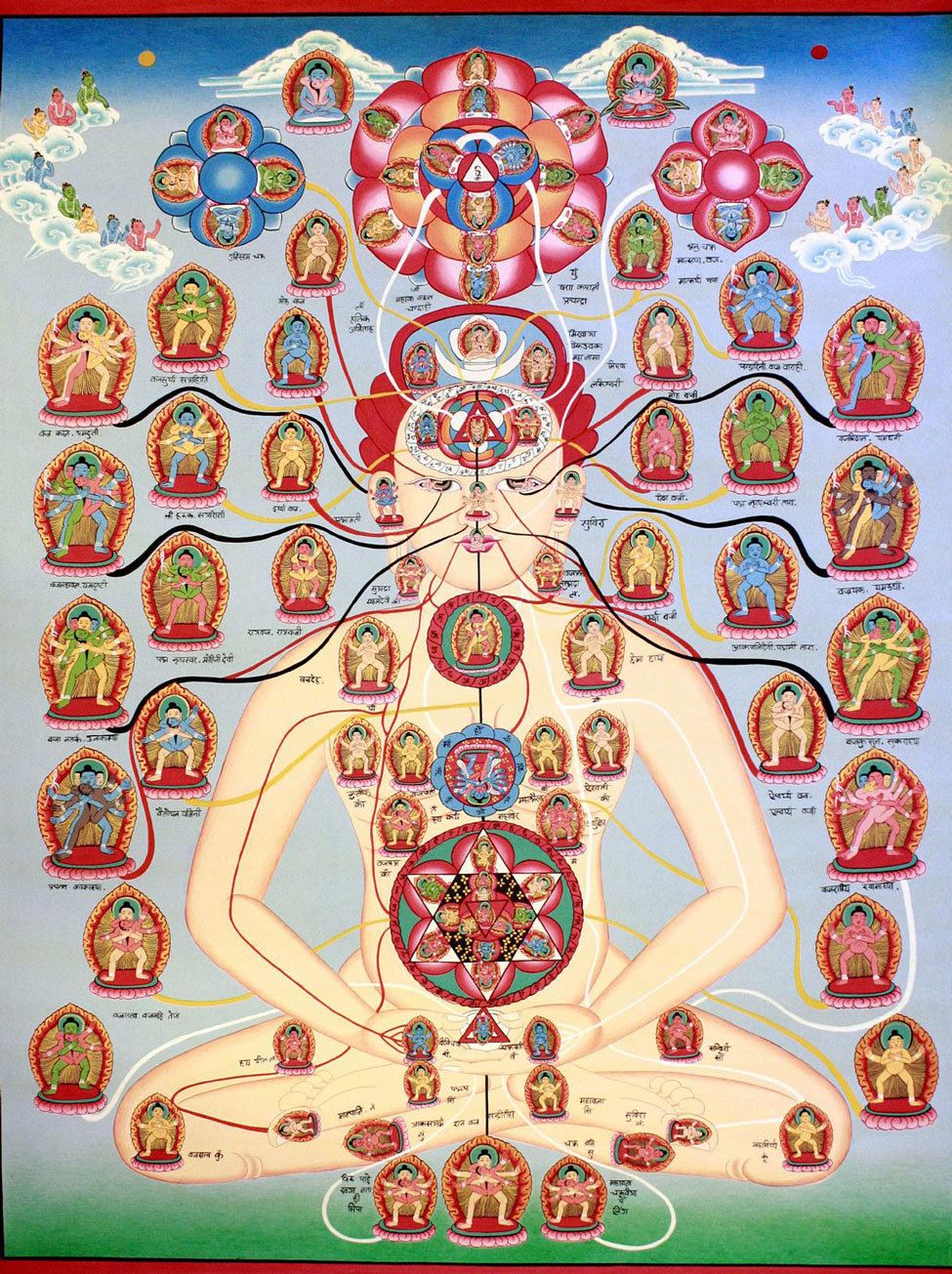
- Hearing: R7
- Touch: R1
- View: R3
- Taste: R6
- Smell: R4
- The Mind: R5
- Intuition: R2
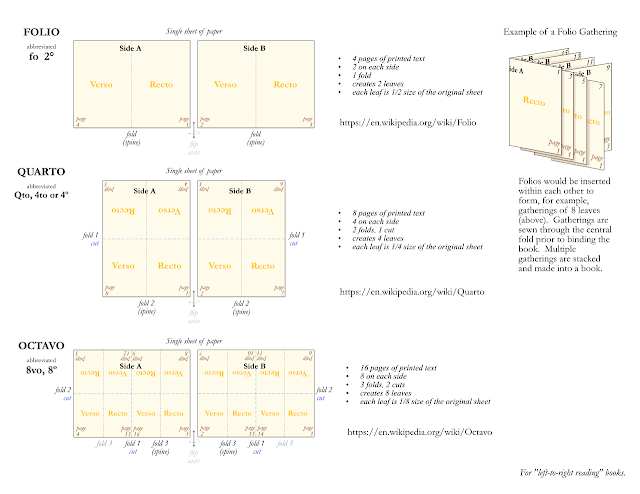
- Sense: S8 (beyond Intuition 🡺 8º, O, 8vo, octavo)

- (music) An interval of twelve semitones spanning eight degrees of the diatonic scale, representing a doubling or halving in pitch frequency.
- (music) The pitch an octave higher than a given pitch.
- (music) A coupler on an organ allows the organist to sound the note an octave above the note of the key pressed (cf sub-octave)
- (poetry) A poetic stanza consisting of eight lines; usually used as one part of a sonnet.
- (fencing) The eighth defensive position, with the sword handheld at waist height, and the tip of the sword out straight at knee level.
- (Christianity) The day that is one week after a feast day in the Latin rite of the Catholic Church.
- (Christianity) An eight-day period beginning on a feast day in the Latin rite of the Catholic Church.
- (mathematics, obsolete) An octonion, an 8-dimensional nonassociative extension of a quaternion with 1 real part and 7 imaginary parts that are each a square root of -1. They can be thought of as octets (or 8-tuples) of real numbers.
- (signal processing) Any of a number of coherent-noise functions of differing frequency that are added together to form Perlin noise.
- (astrology) The subjective vibration of a planet. 🡺 Γαῖᾰ • (Gaîa) ⮀ Γῆ Gē, "land" or "earth" 🡺 Sol, so, or G, the fifth note of the fixed-do solfège starting on C. As such it is the dominant, a perfect fifth above C or perfect fourth below C. When calculated in equal temperament with a reference of A above middle C as 440 Hz, the frequency of middle G (G4) note is approximately 391.995 Hz.

Trying to get up that great big hill of hope
For a destination
And I realized quickly when I knew, I should
That the world was made up of this brotherhood of man
For whatever that means
And so I cry sometimes
When I'm lying in bed
Just to get it all out
What's in my head
And I am feeling a little peculiar
And so I wake in the morning
And I step outside
And I take a deep breath and I get real high
And I scream at the top of my lungs
What's going on?
And I say, hey hey, hey hey
I said hey, what's going on?
Ooh, ooh-ooh
And I try, oh my God, do I try
I try all the time in this institution
And I pray, oh my God, do I pray
I pray every single day for a revolution
And so I cry sometimes
When I'm lying in bed
Just to get it all out
What's in my head
And I am feeling a little peculiar
And so I wake in the morning
And I step outside
And I take a deep breath and I get real high
And I scream at the top of my lungs
What's going on?
And I say, hey hey hey hey
I said hey, what's going on?
Twenty-five years and my life is still
Trying to get up that great big hill of hope
For a destination
10

舉。布袋和尚。常將布袋并破蓆。於通衢往來。布袋內盛鉢盂木履魚飯菜肉瓦石土木諸般總有。或於稠人處。打開布袋內物。撒下云。看看。又一一將起問人云。者箇喚作甚麼。眾無對。
代云。醜婦顰眉。
Hoffman:
布袋 always strolled around the streets, carrying a cloth sack and a torn carpet. The cloth sack was filled with pots, bowls, wooden clogs, fish, rice, vegetables, meat, tiles, rocks, clay, wood, and all kinds of things. Sometimes, in a crowded place, he would open the sack, empty it, and say, "Have a look." Then he would pick the things up one by one and ask, "What is this called?" The crowd was dumbfounded.
MASTER Xutang: The ugly woman frowns.
Master 布袋 Budai always had a cloth bag together with a broken woven mat, arriving on the open road and returning thereby.
Inside his bag, he always had his alms bowl, wooden shoes, rice, fish, and meat for meals, and roof tiles of rock and wood for repairs.
When in a crowded place, he would reach inside, humbly casting the items before people, saying, "Examine each item one by one as they arise in your awareness."
He would then ask, "What item can you know? Many are not correct."
On others' behalf, Xutang said, "A homely woman frowns in imitation of a pouting Xishi (西施)9."
Notes:
Budai appears in very few cases. He appears in Transmission of the Lamp although it is not a Zen text. Also in his Case is someone named Bailu.
Here is a fragment from a poem attributed to him:
Ten thousand dharmas, what is special; heart, why different? Why spend labour searching for meaning in sutras? The heart is originally self-ruled, separate from knowledge Wise ones only realize there is no end to study Neither mundane nor sacred – what then?
Footnote
9) From Book of Serenity, by Wansong: "When 西施 Xishi had a pain in her chest, she held her chest and grimaced. It made her even more beautiful. Homely girls imitating her only increased their ugliness. This is a criticism of study by mouth and ear, those who do not work for ineffable enlightenment."
Thursday, July 29, 2021
"The invariable mark of wisdom is to see the miraculous in the common."
― Ralph Waldo Emerson in Nature, Chapter VIII, 1836
inānis

vānitās f (genitive vānitātis); third declension
- emptiness, nothingness
- vanitas vanitatum ― vanity of vanities
- falsity, falsehood, deception, untruth, untrustworthiness, fickleness
- vanity, vainglory
- vain, empty, vacant, void
- unsubstantial
- (figuratively) groundless, baseless, meaningless, pointless
- ostentatious, boastful
- deceptive, untrustworthy
- 空: emptiness
- 殻: shell
- 唐: the old name for China
- 漢: China
- empty, void, hollow
- vain
- worthless
- foolish, inane
唐
- † to exaggerate; to boast
- † exaggerative; boastful
- † vast; wide; extensive
- † road inside temple quotations ▲
- From: The Classic of Poetry, circa 11th – 7th centuries BCE, translated based on James Legge's version
- Zhōng táng yǒu pì, qióng yǒu zhǐ yì. [Pinyin]
- The middle path of the temple is covered with its tiles; on the height is the beautiful medallion plant.
中唐有甓,邛有旨鷊。
- † in vain; to no avail
- 50th tetragram of the Taixuanjing; "vastness, emptiness, pointlessness" (𝌷)
- (~朝) Tang Dynasty
- 唐詩 / 唐诗 ― tángshī ― Tang poetry
- (figuratively) China
- 唐人 ― tángrén ― Chinese person